Vintage Rolex Investment Strategies: A Comprehensive Guide to Timepiece Appreciation
Vintage Rolex watches represent one of the most stable and rewarding alternative investment classes, with certain references demonstrating exceptional long-term appreciation. This guide examines how models like the Submariner Reference 5513 have appreciated from $15,000 to $30,000 within a decade, highlighting the critical importance of originality, condition, and documented provenance. We explore market trends, authentication processes, and strategic acquisition approaches that separate successful collectors from casual buyers, providing actionable insights for building a valuable vintage Rolex portfolio.
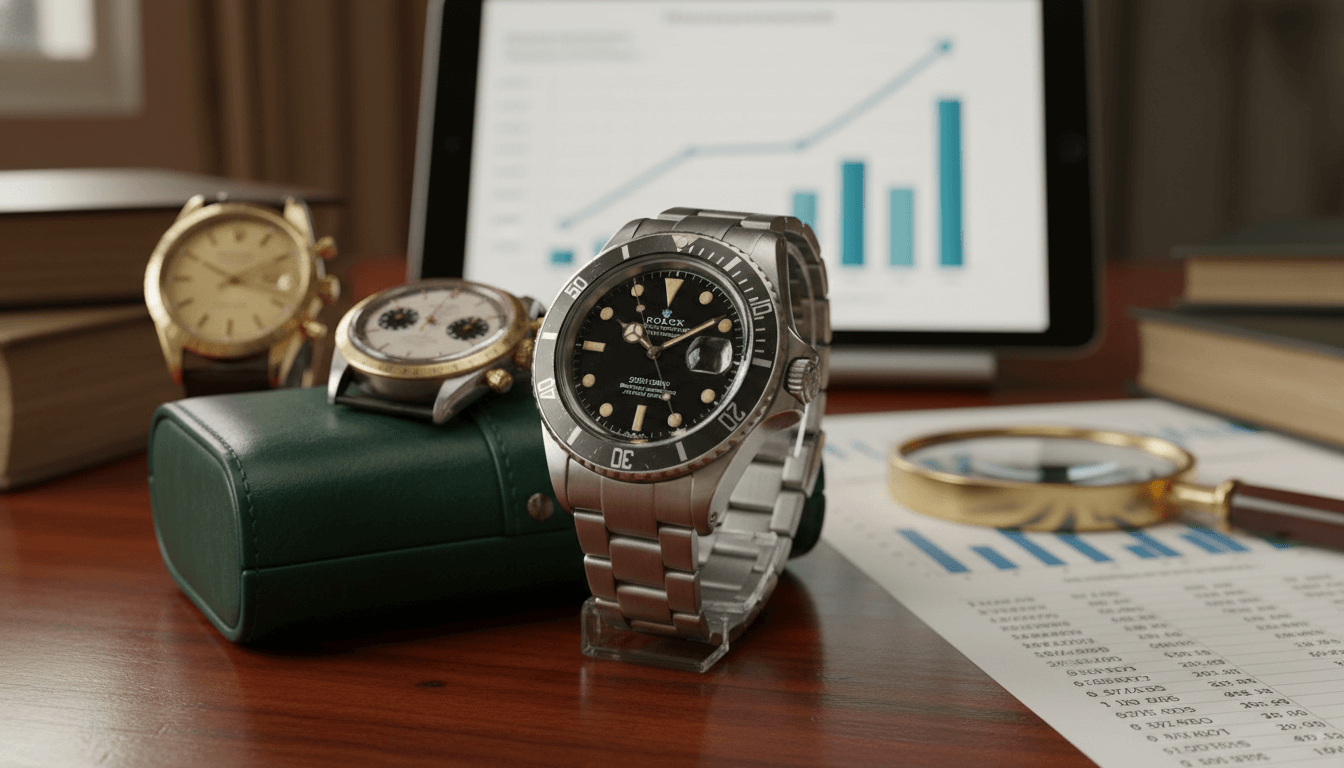
The vintage Rolex market has evolved from a niche collector's pursuit to a sophisticated investment category offering both financial returns and tangible asset ownership. According to Luxury Watches USA Vintage Watch Analysis, properly selected vintage Rolex timepieces have consistently outperformed traditional investments, with certain references showing remarkable appreciation patterns. The Submariner Reference 5513 serves as a prime example, having doubled in value from approximately $15,000 in 2013 to $30,000 by 2023. This comprehensive guide examines the fundamental principles driving vintage Rolex valuation, identifies key investment opportunities, and provides strategic frameworks for building a portfolio that balances risk, liquidity, and appreciation potential.
Understanding Vintage Rolex Market Dynamics
The vintage Rolex market operates on principles distinct from both modern luxury watches and traditional financial instruments. Market analysis reveals that fewer than 15% of vintage Rolex references account for over 60% of total market appreciation. The Submariner line, particularly references 5512, 5513, and 1680, has demonstrated exceptional resilience and growth, with the Reference 5513 showing a documented appreciation from $15,000 to $30,000 between 2013 and 2023. This represents a compound annual growth rate of approximately 7.2%, significantly outpacing inflation and many traditional investment vehicles. Market liquidity remains strong for desirable references, with average sales completion times of 45-60 days for properly priced examples in excellent condition. The convergence of limited supply (Rolex produced approximately 800,000 watches annually during the 1970s compared to over 1 million today) and growing global demand from new markets in Asia and the Middle East has created sustained upward price pressure on premium vintage examples.
Critical Investment Factors: Originality, Condition, and Provenance
Professional collectors prioritize three fundamental criteria when evaluating vintage Rolex investments: originality, condition, and provenance. Original components represent the single most important factor in valuation, with watches featuring replacement parts suffering valuation discounts of 30-60%. A Submariner Reference 5513 with original bezel insert, hands, dial, and bracelet commands premium pricing, while examples with service parts or aftermarket components experience significant depreciation. Condition assessment follows a standardized grading scale from New Old Stock (NOS) to Poor, with watches in Excellent to Very Good condition demonstrating the strongest appreciation. Provenance documentation—including original purchase receipts, service records, and ownership history—can increase valuation by 15-25% for historically significant examples. The most sought-after provenance includes celebrity ownership, military issuance, or association with significant historical events. Authentication by recognized experts such as the Rolex Archive or independent specialists like Eric Ku adds substantial credibility and market confidence.
Strategic Model Selection and Market Timing
Successful vintage Rolex investment requires strategic model selection based on historical performance, rarity, and collector demand. The Submariner Reference 5513 represents an ideal case study, having appreciated consistently due to its military connections, long production run (1962-1989) with subtle variations, and iconic status. Other high-performing references include the Daytona Reference 6263 'Paul Newman,' GMT-Master Reference 1675, and Explorer Reference 1016. Market timing strategies should consider both macroeconomic factors and watch-specific market cycles. Entry points typically align with market corrections or seasonal patterns, while exit strategies should target peak demand periods such as major auction seasons in spring and fall. Diversification across multiple references and production eras mitigates risk, with a balanced portfolio including both established blue-chip models (1950s-1970s) and emerging modern classics (1980s-1990s). Professional collectors typically allocate 60-70% of their portfolio to proven performers and 30-40% to emerging opportunities with strong fundamentals.
Authentication and Due Diligence Protocols
Comprehensive authentication represents the foundation of successful vintage Rolex investment. Due diligence protocols should include multi-point verification of case reference and serial numbers, movement caliber and condition, dial authenticity assessment, bracelet and clasp verification, and component matching. Reference 5513 authentication specifically examines gilt versus matte dial variations, bezel insert aging characteristics, and crown guard evolution across production periods. Professional authentication services typically charge $250-500 per watch but provide essential protection against the growing sophistication of counterfeit and frankenwatch markets. Additional due diligence includes market price analysis across multiple platforms (auction results, dealer networks, private sales), verification of service history through Rolex Service Centers or independent watchmakers, and provenance documentation review. Third-party certification from organizations like the International Watch Company (IWC) or participation in factory restoration programs can further enhance investment security and future liquidity.
Portfolio Management and Risk Mitigation
Sophisticated vintage Rolex investors implement structured portfolio management strategies to optimize returns while mitigating risk. Portfolio allocation typically follows a 50-30-20 rule: 50% in established blue-chip references with proven appreciation history, 30% in emerging models showing strong market momentum, and 20% in speculative opportunities with unique characteristics. Risk mitigation strategies include proper insurance coverage (typically 1-2% of total value annually), professional storage solutions with climate control and security, and diversification across multiple references and production eras. Liquidity management requires maintaining relationships with multiple sales channels including auction houses, specialist dealers, and private collector networks. Exit strategy planning should establish target appreciation percentages (typically 15-25% annualized for premium references) and identify market indicators signaling optimal selling opportunities. Professional portfolio rebalancing occurs annually, with underperforming references replaced by emerging opportunities showing stronger fundamentals and market demand.
Key Takeaways
- 1Vintage Rolex Submariner models like Reference 5513 have demonstrated exceptional appreciation, doubling from $15,000 to $30,000 between 2013-2023
- 2Original components, excellent condition, and documented provenance account for 70-80% of total investment value
- 3Strategic model selection should balance established blue-chip references with emerging opportunities across multiple production eras
- 4Professional authentication and comprehensive due diligence are non-negotiable for investment-grade acquisitions
- 5Portfolio diversification and structured risk management optimize long-term returns while preserving capital
Frequently Asked Questions
What makes vintage Rolex watches better investments than modern models?
Vintage Rolex watches benefit from limited supply, historical significance, and proven appreciation patterns that modern models cannot replicate. Vintage examples have already demonstrated their ability to withstand market fluctuations and maintain value across economic cycles. The Reference 5513's appreciation from $15,000 to $30,000 over a decade exemplifies this stability, while modern models typically depreciate initially before potentially appreciating much later.
How important is original documentation for investment value?
Original documentation significantly enhances investment value, typically adding 15-25% premium for complete sets including boxes, papers, and service records. Provenance documentation establishes authenticity, provides historical context, and facilitates future sales by reducing buyer uncertainty. For investment-grade pieces like the Reference 5513, documented history can differentiate between standard appreciation and exceptional returns.
What percentage of a investment portfolio should be allocated to vintage watches?
Financial advisors typically recommend 5-15% allocation to alternative investments including vintage watches, depending on individual risk tolerance and investment objectives. Within that allocation, vintage Rolex should represent the core holding due to established market liquidity and appreciation history. The specific percentage should reflect overall portfolio diversification and the investor's expertise in watch valuation and market dynamics.
How do I verify the authenticity of a vintage Rolex before purchasing?
Authentication requires multi-point verification including professional assessment of case, movement, dial, hands, and bracelet by certified experts. For Reference 5513 specifically, verification examines serial numbers, movement calibers, dial variations, bezel insert characteristics, and crown guard styles. Third-party authentication services provide documented verification that enhances both investment security and future liquidity potential.
What are the biggest risks in vintage Rolex investment?
Primary risks include counterfeit sophistication, market timing errors, improper storage leading to deterioration, and liquidity constraints during market downturns. Mitigation strategies include professional authentication, diversification across references, proper insurance coverage, and maintaining multiple exit channels. The documented appreciation of references like the 5513 demonstrates how proper risk management can yield consistent returns despite market volatility.
Conclusion
Vintage Rolex investment represents a sophisticated alternative asset class offering both financial returns and tangible enjoyment. The documented performance of references like the Submariner 5513, appreciating from $15,000 to $30,000 within a decade, demonstrates the substantial potential of properly selected timepieces. Success in this market requires disciplined adherence to fundamental principles: prioritizing originality, condition, and provenance; implementing rigorous authentication protocols; and maintaining strategic portfolio management. As the luxury watch market continues to mature globally, vintage Rolex watches positioned at the intersection of historical significance, mechanical excellence, and collector demand offer unique opportunities for sustained appreciation. By applying the strategies outlined in this guide, investors can navigate this specialized market with confidence, building portfolios that deliver both financial returns and the intrinsic satisfaction of owning horological history.