Rolex Daytona Material Variations: Comprehensive Guide to Metals, Pricing & Collector Value
The Rolex Daytona represents horological excellence across five distinct material variations: stainless steel, yellow gold, white gold, Everose gold, and platinum. Each material offers unique characteristics affecting durability, aesthetics, and investment potential. The 2008 introduction of Everose gold marked a significant innovation in Rolex's proprietary alloy technology. Current market analysis reveals substantial price disparities between materials, with platinum and precious metal variants commanding premium valuations while steel models maintain exceptional liquidity. Understanding these material differences is crucial for collectors and investors navigating the pre-owned luxury watch market.
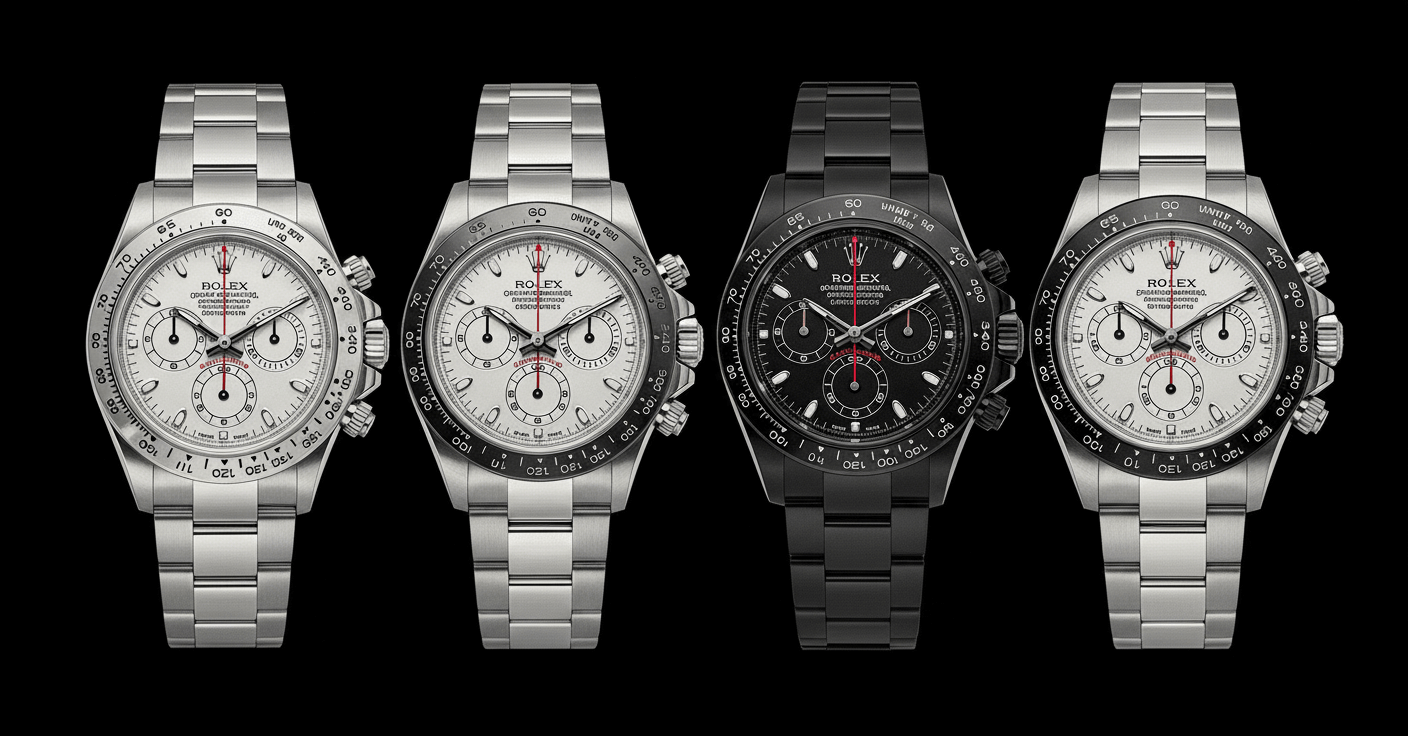
Overview
The Rolex Cosmograph Daytona stands as one of the most iconic chronographs in horological history, with material selection playing a crucial role in determining both aesthetic appeal and investment performance. This comprehensive database examines the five primary material categories available across modern Daytona references: stainless steel (Oystersteel), yellow gold, white gold, Everose gold, and platinum. Each material variation exhibits distinct market behavior, with stainless steel models typically demonstrating the strongest liquidity while precious metal variants offer superior exclusivity and long-term value retention. The material composition directly impacts weight, corrosion resistance, scratch resistance, and overall wearing experience, making material selection a critical consideration for both collectors and daily wearers. Market data indicates that material choices can create price differentials exceeding 300% between entry-level steel models and top-tier platinum configurations.
Detailed Analysis
Market Comparison Points
- Price differential between stainless steel and platinum variants exceeds 300% in both retail and secondary markets
- Everose gold introduced in 2008 represents Rolex's most significant material innovation of the 21st century
- Platinum models feature exclusive ice blue dials not available in other material variations
- Stainless steel demonstrates superior scratch resistance while platinum offers better impact resistance
- Weight variations create significantly different wearing experiences, with platinum models feeling substantially more substantial
- Material combinations (two-tone, full metal) create over 15 distinct aesthetic variations within the Daytona collection
- Investment performance varies significantly by material, with steel showing strongest short-term gains while platinum demonstrates superior long-term stability
Important Notes
Market pricing data reflects Q3 2025 valuations for unworn, complete-set examples with original papers and warranty. Historical data indicates material preferences follow cyclical trends, with yellow gold experiencing renewed popularity during economic expansion periods while stainless steel maintains consistent demand across market conditions. Rolex's material innovations, particularly the 2008 introduction of Everose gold, demonstrate the brand's commitment to metallurgical excellence and long-term product durability. Collectors should note that material preferences often correlate with geographic markets, with Asian markets showing stronger preference for precious metals while European and North American markets demonstrate balanced demand across material categories.