Daytona Movement Evolution: From Manual-Wind to Caliber 4131
The Rolex Daytona's movement evolution spans three distinct generations, beginning with manual-wind calibers (1963-1988) in 37mm cases, transitioning to self-winding Zenith-based movements in 1988, and culminating in the advanced in-house Caliber 4130 and 4131. This progression reflects Rolex's commitment to precision, reliability, and innovation, directly influencing market valuations for collectors and investors. Understanding these technical milestones is essential for accurate appraisal and strategic buying/selling decisions in the pre-owned luxury watch market.
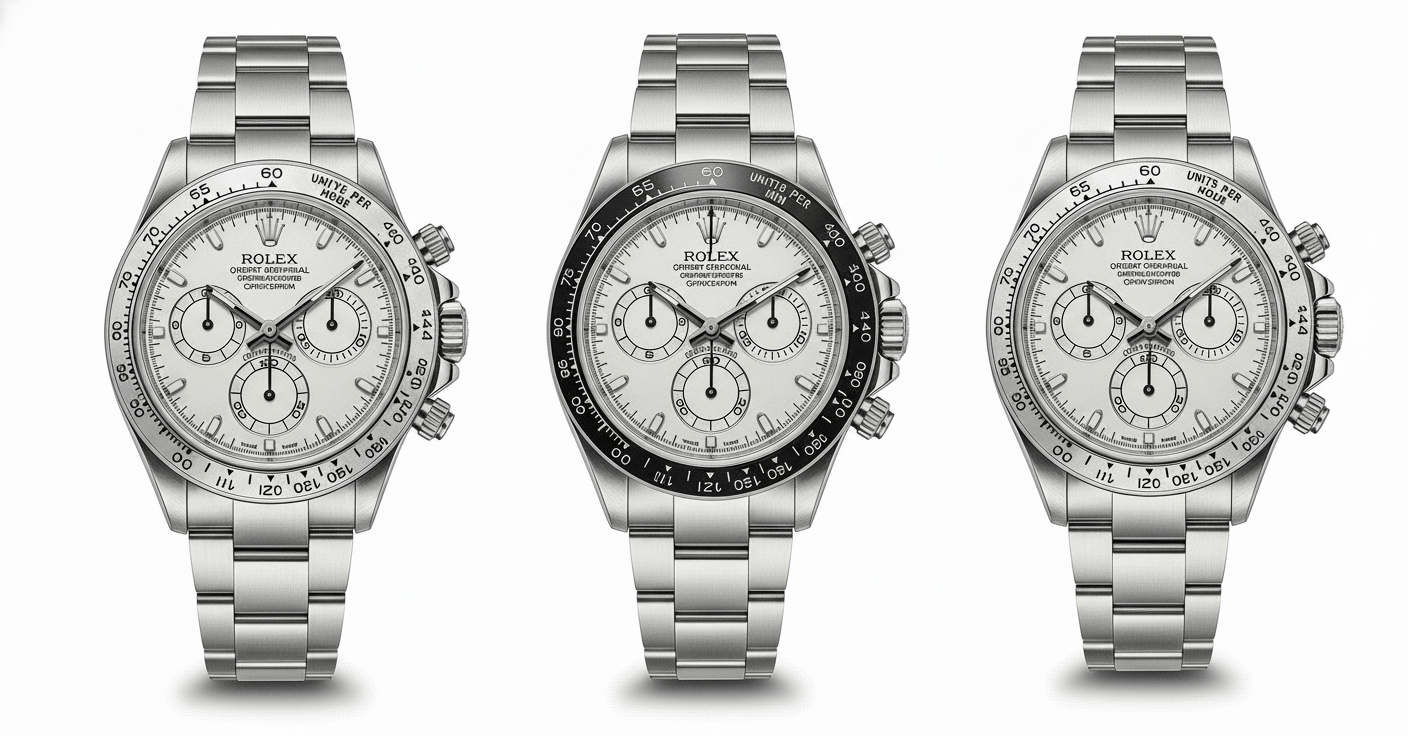
Overview
The Rolex Daytona's movement evolution represents one of horology's most significant technical journeys, transitioning from manual-wind mechanisms to sophisticated self-winding in-house calibers. This transformation spans three distinct generations: the initial manual-wind era (1963-1988) featuring Valjoux-based movements in 37mm cases, the intermediate phase utilizing modified Zenith El Primero movements (1988-2000), and the current era dominated by the entirely in-house developed Caliber 4130 and its successor, Caliber 4131. Each generation brought substantial improvements in accuracy, power reserve, reliability, and serviceability, directly impacting collector demand and secondary market valuations. The movement upgrades correlate with evolving case designs, material innovations, and functional enhancements that have solidified the Daytona's status as a premier chronograph in luxury watch collecting.
Detailed Analysis
Market Comparison Points
- Movement transition dates directly correlate with significant market value shifts
- Manual-wind models command premium valuations due to rarity and historical significance
- Zenith-era watches offer accessible entry points with modern functionality
- Caliber 4130/4131 models demonstrate strongest long-term value retention
- Power reserve improvements from 48 to 72 hours enhance practical usability
- Frequency standardization at 28,800 vph optimized reliability across generations
- Case size evolution from 37mm to 40mm reflects changing wearer preferences
- Material and dial variations within each generation create distinct collector tiers
Important Notes
Market valuation for Daytona models must account for movement generation alongside condition, provenance, and originality. Early manual-wind references in untouched condition achieve auction records exceeding $500,000, while well-preserved Zenith-era stainless steel models typically trade between $25,000-$45,000. Current production Caliber 4130/4131 watches often transact above retail due to allocation challenges, with precious metal and ceramic bezel variants showing particularly strong appreciation. Service history documentation becomes increasingly critical for valuation as movement complexity advances, with Rolex factory service maintaining highest collector preference. The movement evolution narrative significantly enhances investment potential, making technical understanding essential for strategic acquisition and divestment timing.