Luxury Watch Market Investment Principles: A Strategic Guide for Collectors
This comprehensive guide explores the essential principles for successful luxury watch investment, emphasizing strategic approaches to market dynamics and value appreciation. Key focuses include the critical role of limited production models, the enduring importance of brand heritage from leaders like Rolex and Patek Philippe, and adopting a long-term investment perspective. The article details how rarity, condition, and cultural significance drive performance, with luxury watches consistently outperforming traditional asset classes. Practical insights are provided for navigating the pre-owned market to maximize returns.
The luxury watch market has evolved from mere timekeeping to a sophisticated investment class, with certain timepieces delivering returns that consistently outperform traditional assets like stocks and bonds. According to the Global Luxury Watch Investment Guide, strategic investment requires deep understanding of market dynamics, brand reputations, and the specific factors driving value appreciation. For collectors and investors navigating platforms like Rolex-Buy-Sell.com, success hinges on focusing on limited production models, established brand heritage, and maintaining a long-term perspective. This comprehensive analysis examines the fundamental principles that separate profitable watch investments from ordinary purchases, providing actionable insights for both seasoned collectors and newcomers to the pre-owned luxury watch market.
The Foundation of Limited Production and Rarity
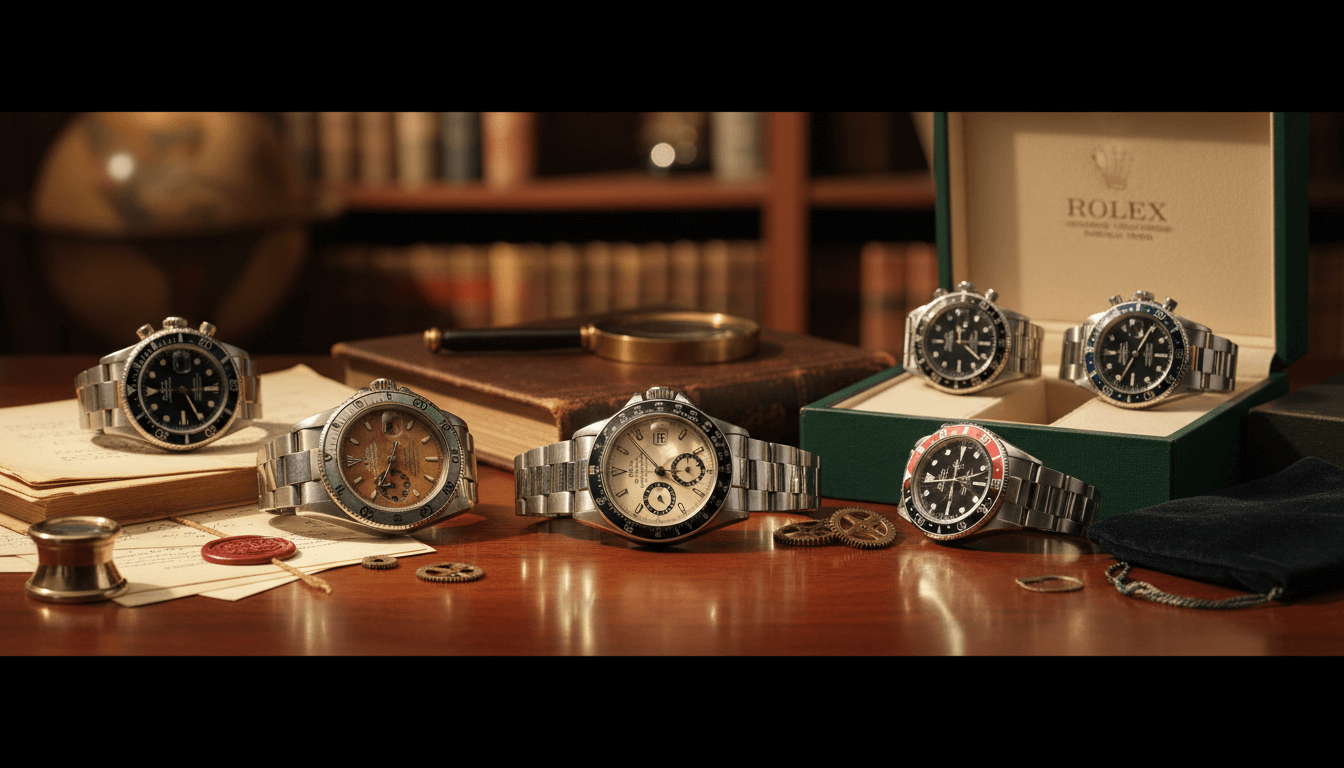
Limited production remains the single most powerful driver of luxury watch value appreciation. Manufacturers deliberately restrict production numbers to create scarcity, which in turn fuels demand and price premiums in secondary markets. Rolex's Daytona 'Paul Newman' models, produced in limited quantities during the 1960s-70s, have appreciated over 1,000% in value at auction. Patek Philippe maintains even stricter production limits, manufacturing approximately 60,000 watches annually compared to Rolex's estimated 1 million, creating inherent scarcity. The principle extends to special editions and collaborations, such as Audemars Piguet's Royal Oak collaboration with Marvel, where limited runs of 250 pieces instantly commanded 300% premiums. This artificial scarcity, combined with genuine manufacturing constraints for complex movements and hand-finishing, creates perfect conditions for value growth. Investors should track production numbers, discontinuation announcements, and special edition releases, as these events typically trigger immediate secondary market reactions.
Brand Heritage and Reputation as Value Drivers
Brand heritage represents the cornerstone of long-term value retention in luxury watches. The trifecta of Rolex, Patek Philippe, and Audemars Piguet dominates investment discussions precisely because of their established histories, consistent quality, and cultural significance spanning generations. Rolex's reputation for robustness and reliability, developed over 115 years, creates universal recognition that transcends markets. Patek Philippe's 'You never actually own a Patek Philippe' marketing campaign perfectly encapsulates generational value transfer, with many models becoming family heirlooms. Historical significance matters tremendously – watches worn by celebrities (Paul Newman's Rolex), associated with historical events (Omega Speedmaster moonwatch), or representing technical milestones (Audemars Piguet's first luxury sports watch) carry premium valuations. Brand reputation also encompasses manufacturing excellence, with in-house movements, precious materials, and exceptional finishing justifying premium pricing. The market consistently rewards brands maintaining strict quality control and innovation while honoring traditional craftsmanship techniques.
Essential Investment Considerations: Rarity, Condition, Cultural Significance
Beyond brand and production numbers, three critical factors determine investment potential: rarity, condition, and cultural significance. Rarity encompasses both quantitative scarcity (limited editions) and qualitative uniqueness (unusual dial configurations, rare materials). A Patek Philippe Ref. 1518 in stainless steel, with only four known examples, sold for $11 million at auction – demonstrating extreme rarity value. Condition assessment requires professional evaluation of case integrity, movement functionality, originality of components, and presence of documentation. Watches with original boxes, papers, and service history typically command 20-30% premiums over naked watches. Cultural significance refers to a watch's historical context and popular appeal – the Rolex Submariner gained iconic status through James Bond films, while the Audemars Piguet Royal Oak revolutionized luxury sports watch design in 1972. These cultural associations create enduring demand beyond technical specifications. Market data shows that watches combining all three elements – extreme rarity, pristine condition, and strong cultural relevance – achieve the most consistent long-term appreciation.
Market Performance vs. Traditional Asset Classes
Luxury watches have demonstrated remarkable performance against traditional investments. The Knight Frank Luxury Investment Index shows rare watches appreciated 108% over the past decade, outperforming art (78%), wine (94%), and classic cars (77%). Specific models like the Patek Philippe Nautilus 5711/1A-010 saw values increase from $30,000 retail to over $150,000 on secondary markets before discontinuation. The Bloomberg Subdial Watch Index, tracking the 50 most-traded luxury watches, revealed average annual returns of 7-15% compared to the S&P 500's historical 10% average. This performance stems from watches' tangible nature, global liquidity through established auction houses and specialized platforms, and immunity to digital disruption. Unlike stocks, luxury watches offer utility and emotional connection while serving as portable stores of value. However, this market requires specialized knowledge – while blue-chip brands generally appreciate, mass-produced luxury watches often depreciate initially before potential long-term growth.
Practical Investment Strategies for Collectors
Successful watch investment requires disciplined strategy rather than emotional purchasing. Begin with established brands like Rolex, Patek Philippe, and Audemars Piguet, which have proven track records across market cycles. Focus on iconic models with historical significance – Rolex Daytona, Submariner, and GMT-Master; Patek Philippe Nautilus and Aquanaut; Audemars Piguet Royal Oak. Prioritize complete sets with original boxes, papers, and service history, as these maintain maximum resale value. Develop relationships with authorized dealers for allocation opportunities and trusted pre-owned specialists for vintage acquisitions. Implement proper storage – temperature-controlled environments, regular maintenance, and insurance coverage. Adopt a minimum 5-10 year holding period to ride out market fluctuations and capture long-term appreciation. Diversify across brands, models, and vintages to mitigate risk. Monitor market indicators through auction results, price databases, and industry publications. Remember that while investment potential matters, personal enjoyment ensures satisfaction regardless of market performance.
Key Takeaways
- 1Limited production creates artificial scarcity that drives value appreciation, with rare models achieving 300-1000% returns
- 2Brand heritage from Rolex, Patek Philippe, and Audemars Piguet provides foundation for long-term value retention
- 3Rarity, condition, and cultural significance form the trifecta of investment-worthy timepieces
- 4Luxury watches have outperformed many traditional assets, delivering 7-15% annual returns in blue-chip categories
- 5Successful investing requires long-term perspective, proper documentation, and diversification across brands and models
Frequently Asked Questions
Which luxury watch brands offer the best investment potential?
Rolex, Patek Philippe, and Audemars Piguet consistently lead investment rankings due to brand recognition, limited production, and historical performance. Specific models from these manufacturers have demonstrated the most consistent appreciation across market cycles.
How important is watch condition for investment value?
Condition is paramount – watches with original components, minimal restoration, and complete documentation (boxes, papers, service history) command significant premiums. Professional authentication and condition assessment are essential before major investments.
What role does limited production play in watch valuation?
Limited production creates scarcity that drives demand and secondary market premiums. Artificially restricted editions and naturally limited complex models typically appreciate fastest, often reaching 200-500% above retail within years of release.
How does the luxury watch market perform compared to stocks?
Top-tier luxury watches have outperformed many stock indices, with the Knight Frank Index showing 108% appreciation over ten years versus 78% for art and 77% for classic cars. However, watch investing requires specialized knowledge and carries different risk profiles.
What is the minimum investment horizon for luxury watches?
A 5-10 year horizon is recommended to navigate market cycles and capture long-term appreciation. Short-term flipping carries higher risks due to transaction costs and market volatility, while long-term holdings benefit from both wearability and value growth.
Conclusion
Luxury watch investment represents a sophisticated alternative asset class that combines personal enjoyment with financial growth potential. The principles of limited production, brand heritage, and long-term perspective provide a robust framework for navigating this specialized market. By focusing on rarity, condition, and cultural significance – particularly within established brands like Rolex, Patek Philippe, and Audemars Piguet – collectors can build portfolios that deliver both emotional satisfaction and strong financial returns. As the Global Luxury Watch Investment Guide confirms, strategic approach to watch collecting consistently outperforms traditional assets when implemented with knowledge and patience. Whether acquiring through authorized dealers or trusted pre-owned platforms like Rolex-Buy-Sell.com, adherence to these fundamental principles separates successful watch investors from casual collectors.