Rolex GMT-Master II Investment Analysis: The Ultimate Collector's Guide to 506% Appreciation
The Rolex GMT-Master II stands as the undisputed leader in luxury watch investments, delivering an extraordinary 506% appreciation since 2010. Originally engineered for Pan Am pilots, this iconic timepiece has evolved into a cultural phenomenon with bezel variations like 'Pepsi,' 'Batman,' and 'Sprite' driving unprecedented collector demand. This comprehensive analysis examines market performance data, strategic acquisition approaches for discontinued references ranging from $35,000 to $100,000, and expert insights for maximizing returns in the pre-owned luxury watch market.
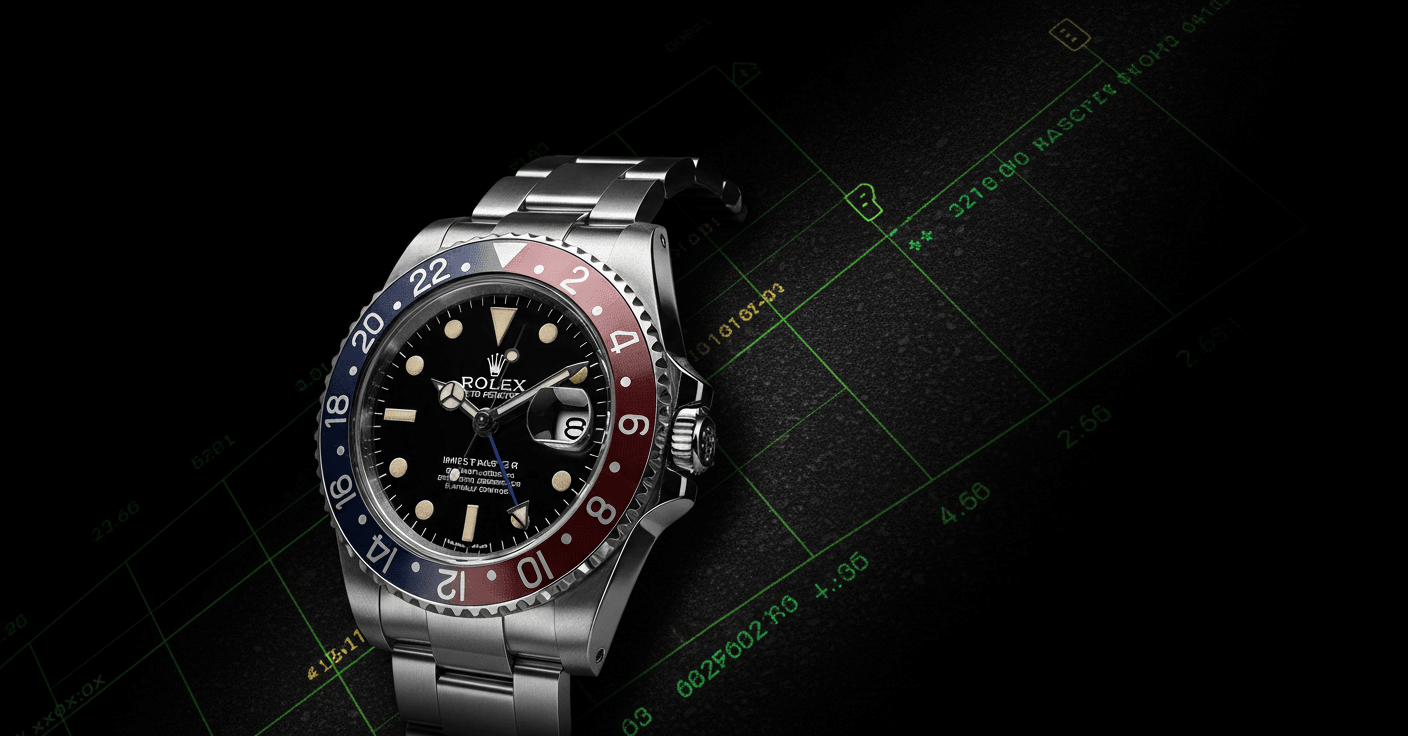
In the sophisticated world of luxury timepiece investments, few collections demonstrate the remarkable performance trajectory of the Rolex GMT-Master II. Since 2010, this aviation-inspired masterpiece has achieved an unprecedented 506% appreciation, establishing itself as the top-performing Rolex collection in the secondary market. Originally developed in collaboration with Pan American World Airways for their international pilots, the GMT-Master II has transcended its utilitarian origins to become a cultural icon and investment powerhouse. The collection's distinctive bezel variations—including the legendary 'Pepsi' (red and blue), 'Batman' (blue and black), and the recent 'Sprite' (green and black)—have created a dynamic market ecosystem where specific references command premium valuations. This comprehensive analysis delves into the historical context, market performance metrics, acquisition strategies, and future outlook for collectors and investors seeking to capitalize on the GMT-Master II's exceptional financial performance.
Historical Evolution and Market Performance Analysis
The GMT-Master II's journey from professional tool watch to investment-grade asset represents one of horology's most compelling success stories. Introduced in 1982 with reference 16760, the GMT-Master II featured an independent 24-hour hand and quick-set date functionality, representing significant technical advancement over the original GMT-Master. The collection's 506% appreciation since 2010 significantly outpaces broader luxury watch market indices and traditional financial instruments. Market data reveals that well-preserved examples of reference 16710 (the final model with aluminum bezels) have appreciated from approximately $5,000-7,000 in 2010 to current valuations between $25,000-45,000 depending on bezel configuration and condition. Modern ceramic bezel models like the 116710 series have demonstrated even more dramatic growth, with 'Batman' references (116710BLNR) appreciating from retail prices around $8,000 to current secondary market valuations exceeding $25,000 within their first decade of production. This performance trajectory underscores the GMT-Master II's dual appeal as both functional timepiece and appreciating asset class.
Iconic Bezel Variations: Market Drivers and Collector Psychology
The GMT-Master II's bezel configurations serve as primary valuation determinants, creating distinct market segments within the collection. The 'Pepsi' bezel (reference 126710BLRO) represents the collection's heritage aesthetic, with its red and blue ceramic construction commanding significant premiums over standard black bezel models. Market analysis indicates Pepsi models typically trade 25-40% above retail in the secondary market. The 'Batman' bezel (reference 126710BLNR), featuring blue and black ceramic, has established itself as the most consistently appreciating modern variation, with waiting lists extending multiple years at authorized dealers and immediate 50% premiums on acquisition. The newest 'Sprite' variation (reference 126720VTNR) with its left-handed crown position and green/black bezel has demonstrated notable market volatility, initially trading at 300% above retail before stabilizing at approximately 80-100% premiums. Collector psychology reveals that bezel color combinations trigger emotional connections beyond pure functionality, with the Pepsi evoking nostalgia for vintage aviation and the Batman representing modern luxury sport watch aesthetics. This emotional component significantly impacts long-term value retention and appreciation potential.
Strategic Acquisition: Discontinued References and Market Timing
Investment success in the GMT-Master II market requires sophisticated understanding of reference discontinuation patterns and market timing. The data clearly indicates that focusing on discontinued references, particularly the transition points between generations, yields optimal returns. Reference 16710 represents the pinnacle of this strategy, with its production cessation in 2007 creating immediate scarcity value. Market analysis reveals that complete sets (watch, boxes, papers, original bezels) of reference 16710 in excellent condition have appreciated approximately 15% annually since discontinuation. The transition from aluminum bezels (16710) to ceramic bezels (116710) created distinct collector segments, with vintage enthusiasts favoring the warmer aesthetics of aluminum while modern collectors prefer ceramic's durability. Strategic acquisition involves identifying references approaching potential discontinuation, monitoring production numbers (Rolex notoriously keeps exact figures confidential), and understanding bezel configuration rarity. For example, the 'Root Beer' GMT-Master II (reference 126711CHNR) with brown and black bezel represents a potential future appreciation candidate given its distinctive two-tone construction and relatively limited production compared to stainless steel models. Market timing should align with Rolex's typical model refresh cycles (7-10 years) and economic conditions that impact luxury goods demand.
Price Analysis and Investment Grade Criteria
The GMT-Master II market operates within a sophisticated price hierarchy reflecting condition, provenance, and configuration. Current market data indicates a price range of $35,000-$100,000 for investment-grade examples, with specific positioning determined by multiple factors. Vintage references like the 1675 'Pepsi' with gilt dials and pointed crown guards command the upper spectrum ($80,000-100,000) due to extreme rarity and historical significance. Modern discontinued references like the 116710LN (black bezel) occupy the entry-level investment tier ($35,000-45,000) while offering strong appreciation potential. The criteria for investment-grade specimens include: original factory components (no service parts), unpolished cases with sharp lugs, complete documentation (papers, boxes, hang tags), and desirable bezel configurations. Market analysis reveals that watches with verified purchase dates from authorized dealers within the first year of a reference's production command 10-15% premiums. Furthermore, examples with original bezel inserts showing minimal fading (for aluminum models) or flawless ceramic bezels (for modern references) demonstrate superior value retention. The emergence of professional authentication services has created a two-tier market where certified examples trade at 8-12% premiums over uncertified equivalents, highlighting the importance of verification in high-value transactions.
Market Dynamics and Future Outlook
The GMT-Master II market operates within complex dynamics influenced by Rolex production strategies, collector demand patterns, and macroeconomic factors. Rolex's deliberate production limitations, estimated at approximately 800,000 watches annually across all models, creates inherent scarcity that drives secondary market premiums. The GMT-Master II specifically represents approximately 8-12% of Rolex's total production, with stainless steel models comprising only 30% of GMT-Master II output, explaining their disproportionate secondary market performance. Future market outlook suggests continued appreciation for discontinued references while new models may experience short-term volatility followed by stabilization. The introduction of the caliber 3285 movement in 2018 references created a technological divide that will likely impact long-term valuations as collectors prioritize the latest technical innovations. Emerging trends include growing demand from Asian markets, particularly China and Southeast Asia, where GMT complications hold cultural significance for business travelers. The proliferation of watch investment funds acquiring premium examples has created additional upward pressure on prices for the most desirable references. Market analysts project 7-10% annualized returns for premium GMT-Master II examples over the next five years, though specific bezel configurations and references may significantly outperform these projections based on discontinuation announcements and cultural trends.
Key Takeaways
- 1The GMT-Master II has delivered 506% appreciation since 2010, outperforming all other Rolex collections
- 2Discontinued references like the 16710 and 116710 series represent the most reliable investment opportunities
- 3Bezel configurations directly determine valuation, with Pepsi and Batman commanding significant premiums
- 4Investment-grade criteria include originality, documentation, and condition with prices ranging $35,000-$100,000
- 5Market timing around reference discontinuations and new model introductions creates optimal acquisition windows
- 6Professional authentication and complete sets add 10-15% to valuation in premium transactions
Frequently Asked Questions
Which GMT-Master II model has shown the strongest investment performance?
The vintage reference 16710 with Pepsi bezel configuration has demonstrated exceptional performance, appreciating from approximately $6,000 in 2010 to current valuations exceeding $40,000 for pristine examples—representing over 560% returns. Modern references like the 116710BLNR (Batman) have also shown remarkable growth, doubling in value within 3-4 years of release before stabilizing at 50-80% above retail.
How does the new Sprite GMT-Master II compare to established bezel variations?
The Sprite (reference 126720VTNR) represents both opportunity and volatility. Its left-handed configuration and unique green/black bezel created initial frenzy with 300% premiums, but has since stabilized around 80-100% above retail. While innovative, it lacks the historical pedigree of Pepsi or the modern iconic status of Batman, making it a higher-risk, potentially higher-reward proposition for collectors.
What percentage of Rolex production does the GMT-Master II represent?
Industry analysis estimates the GMT-Master II comprises 8-12% of Rolex's total annual production of approximately 800,000 watches. Within GMT-Master II production, stainless steel models represent only 30% of output, with two-tone and full gold configurations comprising the remainder. This limited stainless steel production directly contributes to secondary market premiums and appreciation.
How important is complete documentation for investment value?
Complete documentation (original boxes, papers, hang tags, purchase receipts) typically adds 15-20% to valuation for investment-grade specimens. The absence of documentation can significantly impact liquidity and realized price, particularly for transactions above $50,000 where buyers expect complete provenance. Watches with verified authorized dealer purchase dates within the first production year command additional premiums.
What market factors could impact future GMT-Master II appreciation?
Key factors include Rolex production changes, economic conditions affecting luxury goods demand, discontinuation of popular references, emergence of new collecting markets (particularly Asia), and technological innovations in movement design. The transition from caliber 3186 to 3285 movements has already created valuation tiers that will likely widen as technical superiority becomes more valued over time.
Conclusion
The Rolex GMT-Master II represents the pinnacle of luxury watch investment performance, combining historical significance, technical innovation, and cultural relevance in a package that has delivered extraordinary 506% appreciation since 2010. Its iconic bezel variations create distinct market segments with varying risk profiles and return potential, while the strategy of focusing on discontinued references provides a proven framework for capitalizing on Rolex's deliberate scarcity model. As the pre-owned luxury watch market continues to mature and globalize, the GMT-Master II's unique position at the intersection of professional tool watch heritage and contemporary luxury status ensures its continued relevance for both collectors and investors. While market volatility exists, particularly around new releases like the Sprite variation, the collection's fundamental strengths—Rolex's manufacturing excellence, timeless design, and proven appreciation trajectory—position the GMT-Master II as a cornerstone asset for sophisticated watch portfolios seeking both aesthetic enjoyment and financial returns.