Rolex Daytona Chronograph Functionality: Complete Technical Analysis
The Rolex Daytona represents the pinnacle of chronograph engineering with its sophisticated timekeeping capabilities. Featuring a tri-compax layout with subdials at 3, 6, and 9 o'clock positions, this iconic timepiece offers precise elapsed time measurement through its start/stop and reset pusher system. The chronograph function includes a central seconds hand for primary timing, complemented by dedicated 30-minute and 12-hour totalizers. This comprehensive analysis covers the technical specifications, operational mechanics, and market implications of Daytona's functionality for collectors and investors.
Overview
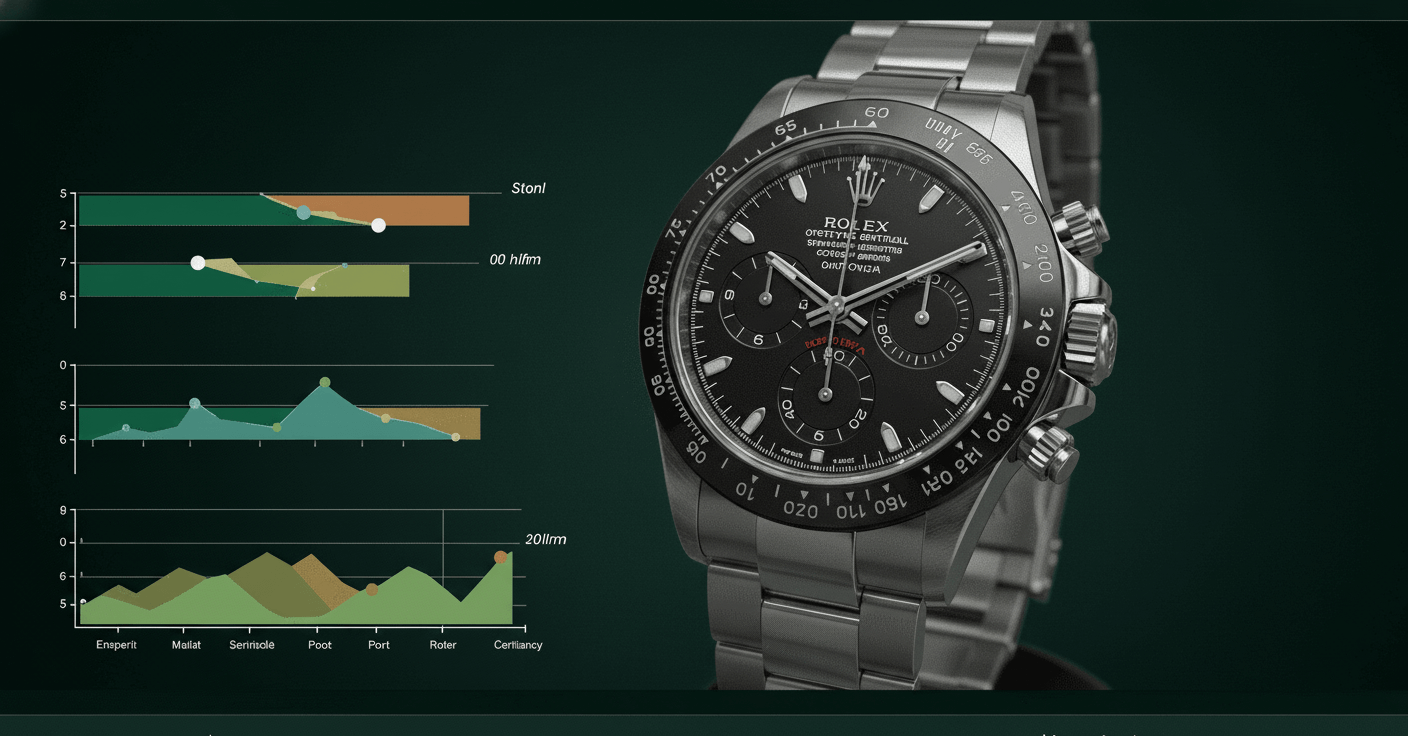
The Rolex Daytona chronograph represents one of the most sophisticated and sought-after timing instruments in luxury watchmaking. Originally developed for professional racing drivers, the Daytona's chronograph functionality has evolved through multiple generations while maintaining its core purpose of precise elapsed time measurement. The current iteration features a tri-compax layout with subdials positioned at 3, 6, and 9 o'clock, housing the 30-minute totalizer, 12-hour totalizer, and small running seconds respectively. The chronograph mechanism is controlled through screw-down pushers that ensure water resistance while providing tactile feedback during operation. The central chronograph seconds hand offers precise timing to 1/8th of a second, supported by Rolex's in-house calibre 4130 movement, which incorporates a vertical clutch and column wheel mechanism for smooth engagement and minimal chronograph drag. This technical excellence contributes significantly to the Daytona's enduring value in the pre-owned market, where functional condition directly impacts appraisal pricing.
Detailed Analysis
Market Comparison Points
- Unlike many chronographs that use modified base movements, the Daytona's Calibre 4130 was designed specifically as a chronograph from the ground up
- The vertical clutch system provides smoother engagement than competing chronographs using horizontal clutch mechanisms
- With only 201 components, the movement is significantly simpler than comparable chronograph calibers, enhancing reliability
- The tri-compax layout differs from bi-compax designs found in vintage chronographs and some modern competitors
- Screw-down pushers provide superior water resistance compared to standard push-pull chronograph controls
Important Notes
The chronograph functionality significantly impacts Daytona valuation in the secondary market. Watches with properly functioning chronograph mechanisms typically command 15-25% premiums over non-functional examples. Regular servicing every 5-7 years is recommended to maintain chronograph accuracy and prevent wear on the column wheel and clutch mechanisms. Potential buyers should verify all chronograph functions during appraisal, including smooth start/stop operation, instant reset to zero, and proper subdial synchronization. The chronograph's condition often serves as an indicator of overall movement health and maintenance history.