Ultimate Authentication Guide for Luxury Watches: Verifying Rolex, Bvlgari & Louis Vuitton
This comprehensive guide provides expert authentication techniques for luxury watches, focusing on critical verification methods including model and serial number validation, material consistency checks, and cyclops window examination. Learn how to distinguish genuine Rolex, Bvlgari, and Louis Vuitton timepieces from sophisticated counterfeits using professional authentication protocols. Essential reading for buyers and sellers in the pre-owned luxury watch market seeking to ensure authenticity and protect their investments.
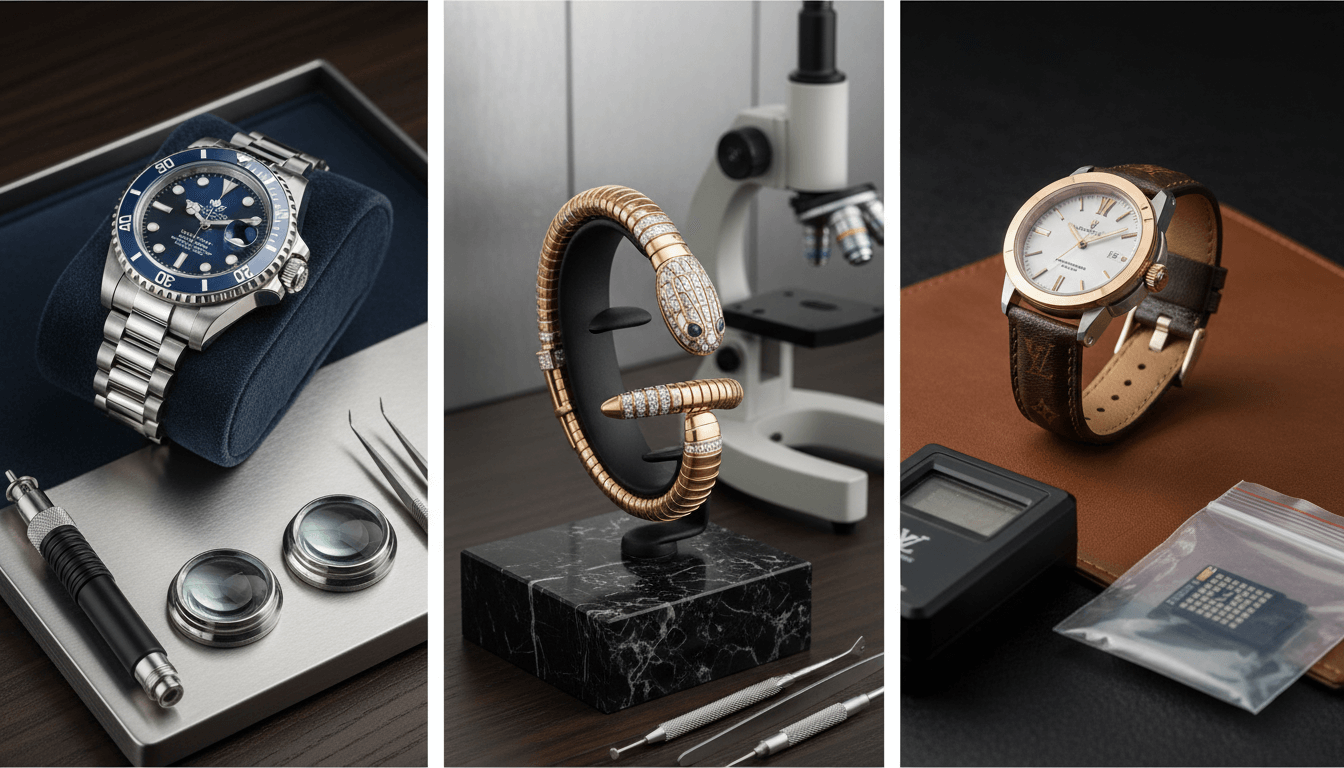
In the sophisticated world of luxury timepieces, authentication stands as the critical barrier between genuine horological masterpieces and increasingly sophisticated counterfeits. The global counterfeit watch market accounts for approximately $2.5 billion annually, making proper authentication essential for collectors, investors, and enthusiasts alike. This comprehensive guide draws from myGemma's extensive authentication database and Rolex-Buy-Sell.com's professional expertise to provide detailed verification protocols for Rolex, Bvlgari, and Louis Vuitton watches. Understanding these authentication principles protects your investment and ensures you're acquiring genuine craftsmanship worthy of the luxury watch designation.
Model Number Verification: The Foundation of Authentication
Model numbers serve as the primary identifier for luxury watches, with each manufacturer employing specific coding systems that must be meticulously verified. Rolex model numbers typically consist of 4-6 digits with specific endings that indicate case material and bezel type—for example, '116610LN' denotes a Submariner with black bezel and Oystersteel case. Bvlgari employs alphanumeric codes like 'BVLGARI.BVLGARI 102123' where the initial digits reference the collection and subsequent numbers indicate specific variations. Louis Vuitton utilizes codes such as 'Q1E236' where the prefix indicates the collection and subsequent characters define materials and limited editions. Authentication requires cross-referencing these numbers against official manufacturer databases and verifying that all physical characteristics align with the model specifications. Professional authenticators examine not only the number format but also the engraving quality, depth, and placement, as counterfeiters often use incorrect fonts, shallow engraving, or improper positioning.
Serial Number Authentication: Tracking Provenance and Authenticity
Serial numbers represent the unique fingerprint of each luxury watch, containing critical information about production date, manufacturing location, and specific production batch. Rolex serial numbers transitioned from 4-6 digit codes to randomized alphanumeric systems in 2010, with each number corresponding to specific production years and facilities. Verification requires checking against Rolex's internal databases and ensuring the number matches the watch's estimated production period. Bvlgari serial numbers typically feature 6-8 digits engraved between the lugs, with the first digits indicating production year. Louis Vuitton employs a 6-character alphanumeric system where the first character represents the year and subsequent characters define production details. Beyond database verification, experts examine the engraving technique—genuine watches feature precise, laser-etched or deeply engraved numbers with consistent spacing, while counterfeits often show irregular depth, incorrect fonts, or evidence of re-engraving. Serial number verification also helps identify stolen timepieces and establish provenance, crucial for high-value transactions.
Physical Characteristics Examination: The Expert's Eye
Physical inspection remains the most reliable authentication method, requiring detailed examination of materials, craftsmanship, and specific brand hallmarks. Color consistency verification involves checking that all gold, platinum, or ceramic components match manufacturer specifications—Rolex uses exclusively 18kt gold with specific alloy compositions that create distinctive color tones. Material verification extends to examining the weight (genuine Rolex Submariner weighs approximately 153g), bracelet construction (Rolex Oyster bracelets feature solid links with specific tolerances), and crystal quality (scratch-resistant sapphire with anti-reflective coating). The cyclops window magnification represents a critical authentication point—genuine Rolex watches feature a 2.5x magnification cyclops that perfectly centers over the date window, while counterfeits often show 1.5x-2x magnification with imperfect alignment. Additional physical checks include movement sound (genuine Swiss movements have distinctive winding and ticking characteristics), crown operation (smooth threading with precise engagement), and lume application (even, long-lasting luminescence with specific color tones).
Professional Authentication Services: When Expertise Matters Most
Despite comprehensive personal verification methods, professional authentication services provide the ultimate assurance for high-value transactions. Certified watchmakers from organizations like the American Watchmakers-Clockmakers Institute (AWCI) or manufacturers' authorized service centers possess specialized equipment including high-power microscopes, pressure testing machines, and movement analyzers that detect even the most sophisticated counterfeits. These experts conduct movement authentication by examining the balance wheel, escapement, and finishing techniques that counterfeiters cannot replicate. Professional services also verify water resistance through pressure testing, authenticate materials using X-ray fluorescence analyzers, and provide certified documentation that enhances resale value. For watches valued above $10,000, professional authentication costing $150-$400 represents essential insurance against counterfeit losses. Many luxury watch marketplaces now require third-party authentication certificates, making this service indispensable for serious collectors and sellers.
Key Takeaways
- 1Always verify model numbers against official databases and cross-reference with physical characteristics
- 2Serial number authentication requires checking engraving quality, format consistency, and database matches
- 3Physical inspection must include cyclops magnification (2.5x for Rolex), material weight, and color consistency
- 4Professional authentication services provide essential verification for watches valued above $10,000
- 5Document all verification steps and maintain authentication certificates for resale purposes
Frequently Asked Questions
How can I verify a Rolex serial number without official database access?
While Rolex maintains proprietary databases, independent resources like Bob's Watches serial number database, professional watch forums, and cross-referencing with known production dates provide reliable verification. However, for definitive authentication, professional services remain essential.
What are the most common authentication mistakes with Bvlgari watches?
Common errors include overlooking the precision of Bvlgari's logo engraving (genuine features perfect symmetry and depth), missing inconsistencies in ceramic bezel finishing, and failing to verify the unique serial number placement between specific lugs that varies by collection.
How does Louis Vuitton watch authentication differ from traditional Swiss brands?
Louis Vuitton authentication emphasizes case back engravings, limited edition verification through specific numbering systems, and examination of the distinctive Tambour case shape. Additionally, authentication requires verifying the quality of leather straps and examining the unique movement decorations specific to Louis Vuitton's manufacture pieces.
Can modern counterfeits replicate the cyclops magnification accurately?
High-quality counterfeits have improved cyclops replication but still typically achieve only 2.0x-2.2x magnification versus Rolex's precise 2.5x. Additionally, counterfeit cyclops often shows optical distortion, imperfect bonding, and incorrect height positioning that experts can identify under magnification.
Conclusion
Luxury watch authentication represents a multifaceted process requiring meticulous attention to model numbers, serial verification, physical characteristics, and professional validation. As counterfeiters employ increasingly sophisticated techniques, combining personal verification methods with expert authentication services provides the most robust protection for your investment. The authentication principles outlined—from verifying correct model number endings to examining precise cyclops window magnification—form the foundation of secure luxury watch acquisition. Remember that in the pre-owned luxury watch market, authentication isn't merely a precaution; it's an essential component of ownership that preserves value, ensures craftsmanship, and maintains the integrity of horological excellence. For transactions involving Rolex, Bvlgari, Louis Vuitton, or any luxury timepiece, comprehensive authentication remains the non-negotiable standard for informed collectors and investors.